Clear ranking visibility
Know exactly which keywords are moving and which require immediate action.
SERP Rank Tracking
Track where you rank, how competitors move, and where visibility is leaking. Use ranking insights to increase Google presence, improve AI citation likelihood, and guide subscription-focused growth actions.
The feature is built for teams that need fast, defensible ranking decisions tied to business outcomes.
Know exactly which keywords are moving and which require immediate action.
See who is taking your positions and where to recover visibility before losses compound.
Focus optimization on ranking opportunities that can drive higher intent traffic and subscriptions.
Each module maps pain point to action so your team can execute faster.
Module 1
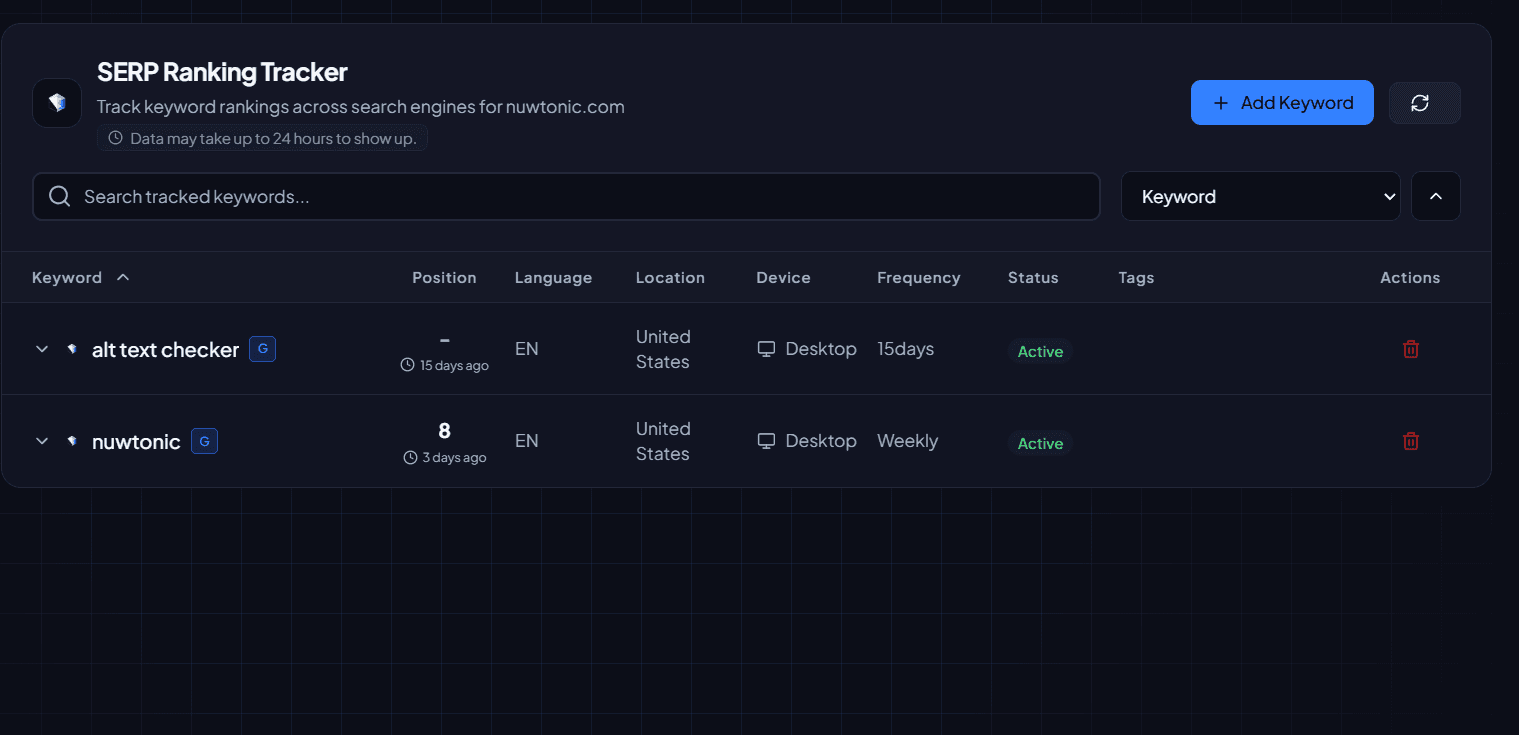
Ranking teams need one place to monitor all tracked keywords by market context.
Pain point
Without centralized tracking, teams miss drops and spend time validating scattered reports.
What this module shows
A unified table shows keyword, position, language, location, device, frequency, and status.
Recommended decision
Prioritize keywords with weak positions but strong business intent first.
Expected business impact
Faster reaction time and better alignment between ranking work and subscription growth goals.
Module 2
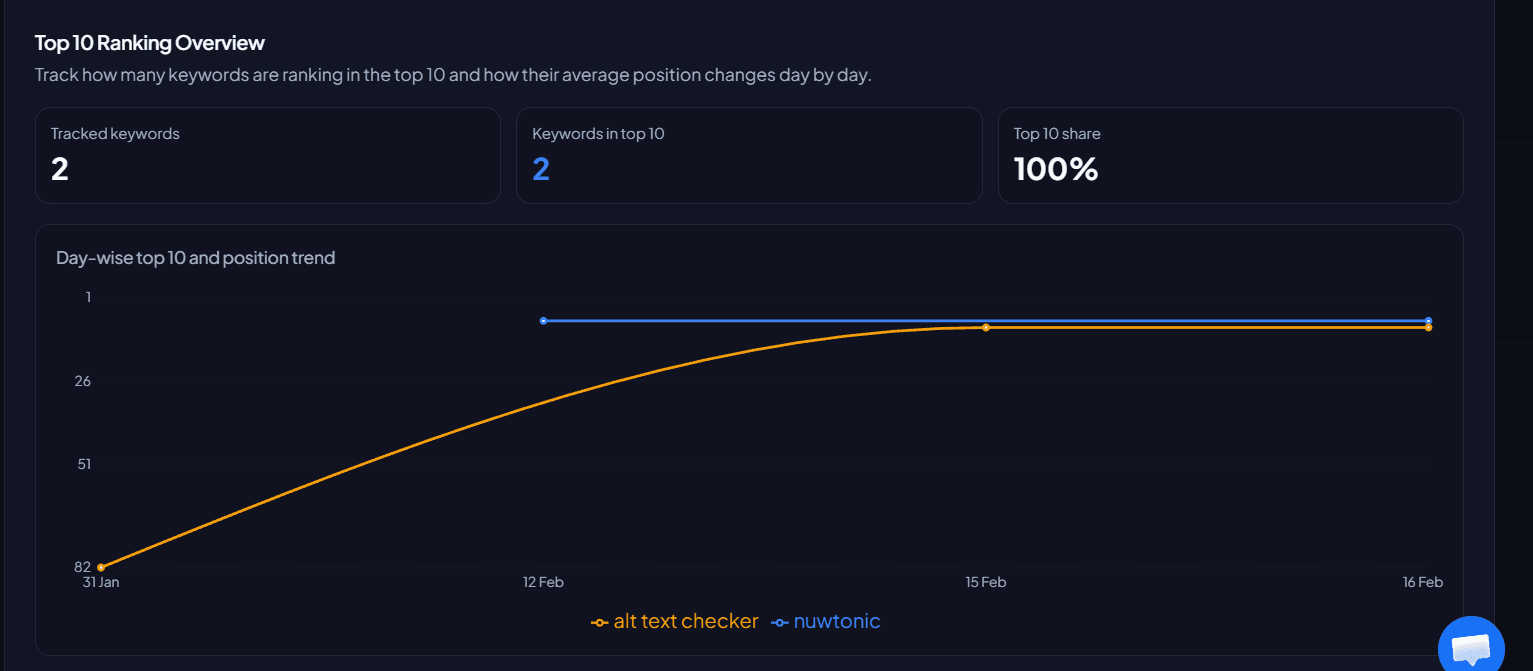
Quickly see how many tracked keywords are in the top 10 and how their average positions change day by day.
Pain point
When ranking data is spread across rows and dates, teams miss fast identification of top-performing keywords.
What this module shows
A day-wise overview shows tracked keywords, keywords in top 10, top 10 share, and trend lines.
Recommended decision
Start with this view to identify top-10 winners and keywords close to entering the top 10.
Expected business impact
Faster prioritization and clearer reporting on visibility gains that drive qualified organic traffic.
Module 3
Single-point position checks hide trend direction and risk.
Pain point
Teams cannot forecast ranking risk if they only monitor today's rank.
What this module shows
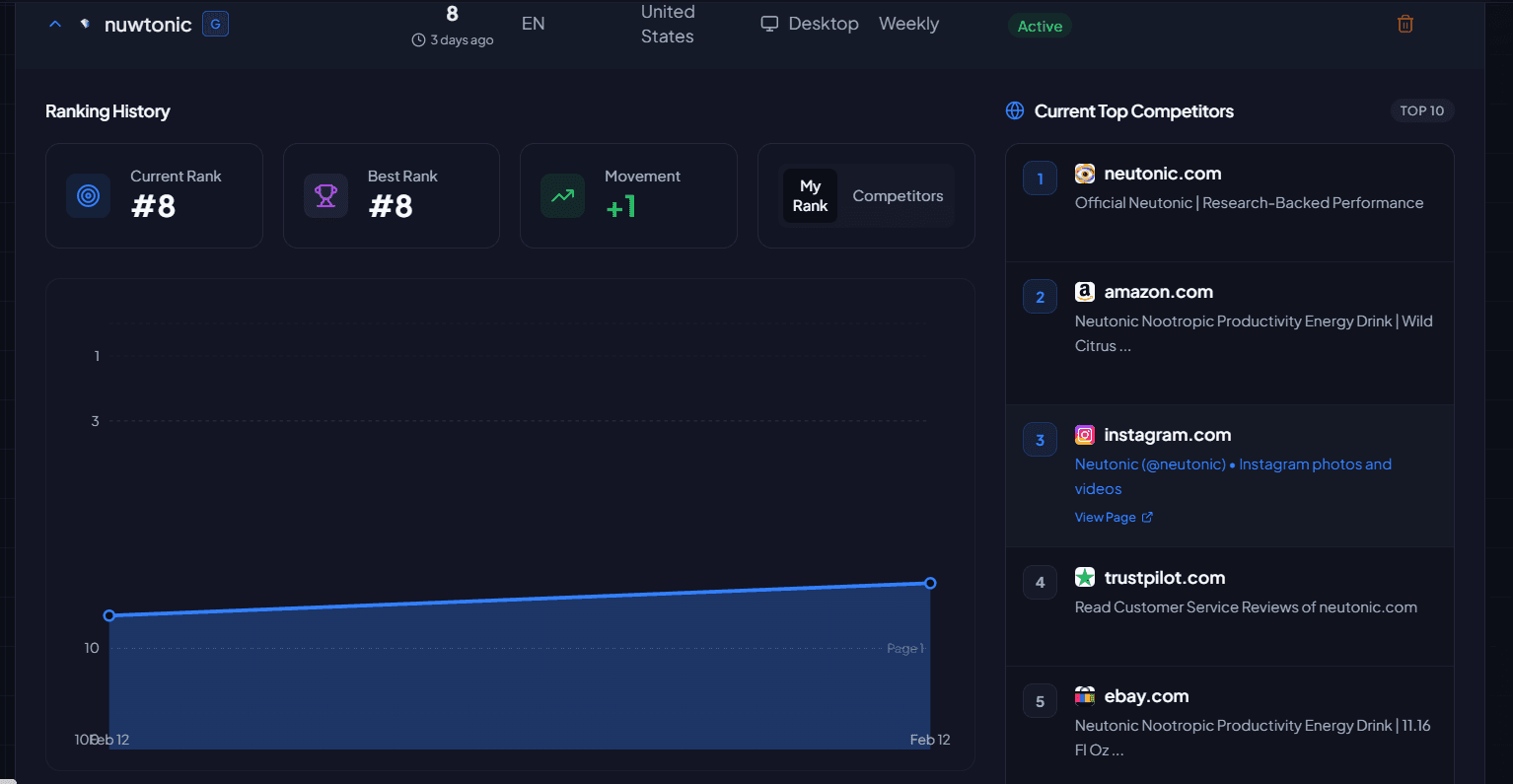
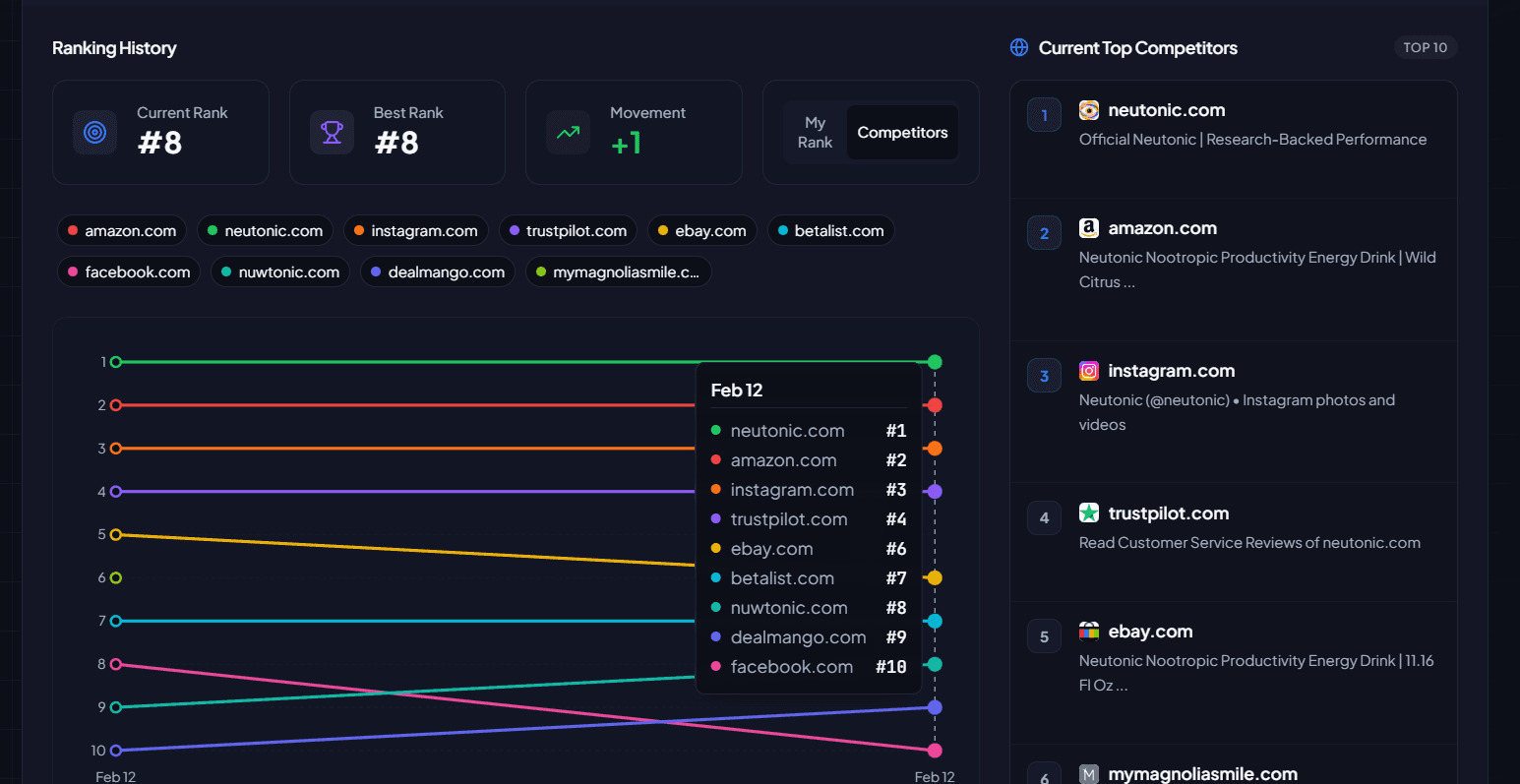
Historical movement with current rank, best rank, and trend trajectory highlights momentum.
Recommended decision
Escalate keywords with negative trend slope before they fall out of high-visibility positions.
Expected business impact
Reduced ranking decay and stronger stability in organic acquisition funnels.
Module 4
You need to know who is outranking you and why.
Pain point
Without competitor context, teams optimize blindly and miss strategic gaps.
What this module shows
Competitor overlays and top competitor snapshots expose who is winning the SERP.
Recommended decision
Target SERP gaps where competitors outrank you with weaker or outdated pages.
Expected business impact
Higher recovery potential, stronger Google ranking gains, and better probability of AI citation visibility.
Run this sequence weekly to convert ranking data into growth execution.
Review keyword tracking table to identify at-risk and high-opportunity keywords.
Analyze my-rank history to detect trend deterioration early.
Use competitor view to understand who is winning and where content gaps exist.
Assign SEO and content tasks by keyword priority and conversion intent.
Track movement after implementation and scale what improves rank and subscription outcomes.
Higher and more stable visibility in Google improves discoverability signals. When pages are strong in competitive SERPs, they are better positioned to be referenced in AI-driven answers.
It helps prioritize ranking opportunities tied to high-intent keywords, which can bring more qualified visitors and reduce friction in the path to subscription.
Yes. The competitor view surfaces top competing domains and trend lines so your team can respond strategically.
Yes. Both can use it to monitor ranking accountability, prioritize execution, and report impact clearly.
New to agentic SEO?
Read the definitive guide to agentic SEO and see how every Nuwtonic module fits into one execution loop.
Track keywords, monitor competitors, and execute high-impact ranking improvements with less friction.