
We are launching on AppSumo soon. Join the waitlist to get first access to our best lifetime deal, plus an additional insane early-bird bonus offer.
- Early deal-live alert so you can act before the crowd
- Priority onboarding request link for faster time-to-value
- Exclusive Week-1 SEO and GEO execution checklist
Founder-list bonuses are limited and sent only to confirmed subscribers. No spam. We only send launch updates and deal access details.
Free EEAT Audit Tool
Instantly evaluate your content against Google's Experience, Expertise, Authoritativeness, and Trustworthiness guidelines.
Enter Page URL
https://example.com/blog/post-name
Why EEAT Matters for SEO
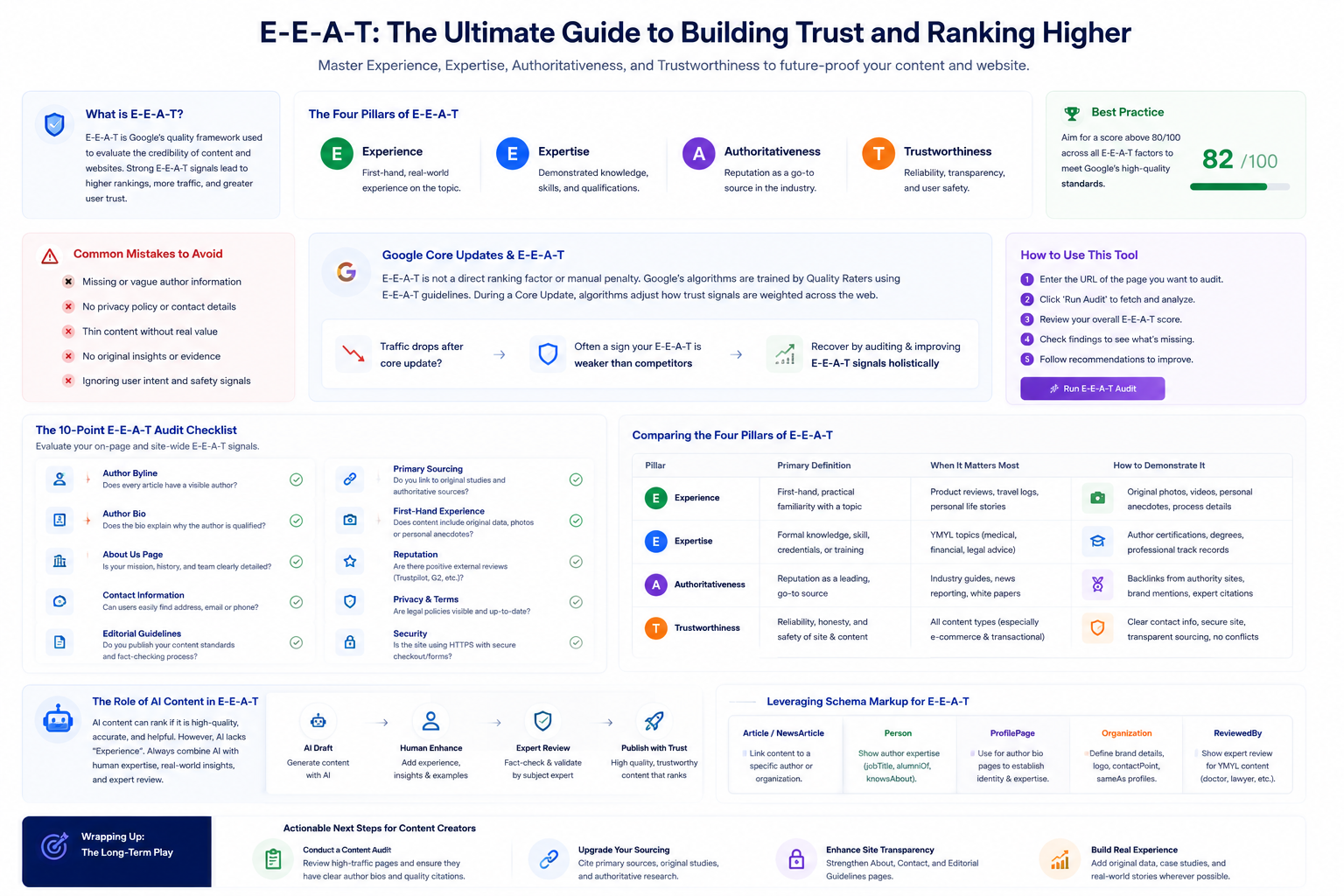
EEAT is a critical component of Google's search algorithm, especially for YMYL (Your Money or Your Life) topics. High EEAT scores correlate with better rankings, higher click-through rates (CTR), and increased trust from users. Google wants to rank content created by experts that demonstrates first-hand experience and is hosted on authoritative, trustworthy sites.
What is an EEAT Audit?
An EEAT Audit evaluates a webpage based on Google's Quality Rater Guidelines: Experience, Expertise, Authoritativeness, and Trustworthiness. This tool scans your content for signals that demonstrate these qualities, such as author bylines, comprehensive content, contact information, and secure connection protocols.
When & Who Should Use This Tool
This tool is essential for SEOs, content marketers, bloggers, and developers. Use it when launching new content, auditing existing pages, or investigating traffic drops. It's particularly important for health, finance, and legal content where trust is paramount.
Recommended guides
Use these guides to fix the issues you found and improve your SEO performance.
Best Practices & Thresholds
Google expects clear authorship (Expertise), original insights (Experience), reputable sourcing (Authoritativeness), and a secure, transparent site (Trustworthiness). Aim for a score above 80/100 to ensure your content meets high-quality standards.
Common Mistakes to Avoid
Many sites fail to provide clear author information, lack privacy policies, or have thin content that doesn't demonstrate expertise. Ignoring these signals can lead to poor rankings, even with good keyword targeting.
Google Core Updates and EEAT
EEAT is not a real-time ranking factor, nor is it a manual penalty. Instead, Google's algorithms are trained by Quality Raters using the EEAT guidelines. When Google rolls out a Broad Core Update, the algorithm adjusts how it weighs these trust signals across the web. If your site loses significant traffic during a Core Update—especially in YMYL (Your Money or Your Life) niches—it is often a sign that your EEAT profile is weaker than your competitors. Recovering from these drops requires a comprehensive EEAT audit and a long-term commitment to improving site trust.
The 10-Point EEAT Audit Checklist
Use this quick checklist to evaluate your on-page and site-wide EEAT signals before publishing.
- Author Byline: Does every article have a visible author?
- Author Bio: Does the bio explain why the author is qualified to write on this topic?
- About Us Page: Is your organization's history, mission, and team clearly detailed?
- Contact Information: Can users easily find a physical address, email, or phone number?
- Editorial Guidelines: Do you publish your standards for accuracy and fact-checking?
- Primary Sourcing: Do you link to original studies, data, and authoritative sources?
- First-Hand Experience: Does the content include original photos, data, or personal anecdotes?
- Reputation: Are there positive external reviews (e.g., Trustpilot, G2) for your brand?
- Privacy & Terms: Are your legal policies visible and up-to-date?
- Security: Is the website using HTTPS with secure checkout/forms?
How to Use This Tool
Enter the URL of the page you want to audit.
Click 'Run Audit' to fetch and analyze the page content.
Review your overall EEAT Score and the breakdown for each category.
Check the specific findings to see what signals are missing.
Follow the actionable recommendations to improve your page's EEAT.
Comparing the Four Pillars of EEAT
Because EEAT is a multi-part assessment, different types of content require different balances of the four pillars. Here is how they stack up against each other:
| Pillar | Primary Definition | When It Matters Most | How to Demonstrate It |
|---|---|---|---|
| Experience | First-hand, practical familiarity with a topic | Product reviews, travel logs, personal life stories | Original photos, videos, personal anecdotes, process details |
| Expertise | Formal knowledge, skill, credentials, or training | YMYL topics (medical, financial, legal advice) | Author certifications, degrees, professional track records |
| Authoritativeness | Reputation as a leading, go-to source in an industry | Industry guides, news reporting, white papers | Backlinks from authority sites, brand mentions, expert citations |
| Trustworthiness | Reliability, honesty, and safety of the site and content | All content types (especially e-commerce and transactional) | Clear contact info, secure checkout, transparent sourcing, no conflicts of interest |
The Role of AI Content in EEAT
With the rise of generative AI, many creators wonder if AI content harms their EEAT score. Google's stance is clear: they reward high-quality content however it is produced. However, AI inherently lacks the first "E" (Experience). An AI cannot test a product, share a personal anecdote, or demonstrate real-world skills. To rank well, AI-generated content must be heavily edited and augmented with human experience, expert review, and original insights.
How to Fix or Optimize
Improve Authorship
Add detailed author bios with credentials and links to social profiles.
Boost Trust
Ensure your site is HTTPS, has a visible Privacy Policy, and provides clear contact info.
Showcase Experience
Include original photos, personal anecdotes, or case studies to prove you know the topic.
Build Authority
Cite reputable sources and aim to get backlinks from industry leaders.
Leveraging Schema Markup for EEAT
Technical SEO plays a massive role in communicating your EEAT to search engines. By implementing the correct Structured Data (Schema), you explicitly tell Google exactly who wrote the content and why they are an expert.
Use the author property to link the content to a specific person or organization.
Create a robust profile for your authors on their bio pages, including properties like alumniOf, jobTitle, and knowsAbout.
The recommended schema type for author bio pages to establish their identity and expertise.
Define your brand's official details, including logo, contactPoint, and sameAs (links to official social profiles).
Critical for YMYL content. Use this to show that a qualified expert (e.g., a doctor or lawyer) has verified the content.
Wrapping Up: The Long-Term Play
Actionable Next Steps for Content Creators
Building solid EEAT is not a one-time project; it is a long-term commitment to editorial integrity and user safety. If you want to future-proof your website against algorithm updates, start implementing these steps today:
- Conduct a Content Audit: Review your existing high-traffic pages and ensure they have clear, verifiable author bios and high-quality outbound citations.
- Upgrade Your Sourcing: Stop relying on secondary sources. Whenever possible, find and cite the primary source of any data or claim you make.
- Enhance Site Transparency: Ensure your "About Us," "Contact," and "Editorial Guidelines" pages are robust, easy to find, and accurate.
Sources and References
- •Google Search Quality Rater Guidelines: Google's search quality guidance
- •Princeton University Scholarly Integrity Guidance: Princeton University's Scholarly Integrity guidelines
- •Academic Review on Evidence Synthesis: academic reviews on evidence synthesis
Frequently Asked Questions About EEAT
Common EEAT Questions Answered
What is a good EEAT score?
While there is no official 'EEAT score' from Google, our tool estimates your alignment with quality guidelines. A score above 80 suggests strong signals, while below 50 indicates significant room for improvement.
Is EEAT a ranking factor?
No. Google has stated repeatedly that EEAT is not a direct ranking factor. It is a concept used to guide the development of search algorithms and help human raters evaluate search quality.
What is the difference between E-A-T and E-E-A-T?
The difference is the addition of the first "E"—Experience. In December 2022, Google updated its guidelines to include Experience alongside Expertise, Authoritativeness, and Trustworthiness to reward content written by people with real-world, hands-on experience.
How does EEAT apply to YMYL content?
Because YMYL content can directly impact a person's health, financial stability, or safety, Google applies much stricter standards of EEAT to these topics. A lack of verifiable expertise or sourcing on a YMYL page will almost certainly lead to poor organic visibility.
Do author bios affect EEAT?
Yes, absolutely. Clear, descriptive author bios help both human raters and search algorithms verify the credentials, experience, and identity of the content creator. This directly supports the Expertise and Experience pillars.
How can I improve my Trustworthiness?
Switch to HTTPS, make your contact information easy to find, publish a clear privacy policy and terms of service, and ensure your site has a professional design.
Complete your GEO workflow
Use these free tools in sequence to find AI Overview opportunities, audit pages for citation readiness, validate trust signals, and polish titles.
- 1
Find AI Overview keywords
Detect queries that trigger AI Overviews and prioritize citation opportunities before competitors do.
AI Overview Keyword Finder
- 2
Audit GEO readiness
Score structure, entities, and extraction signals to see whether your page can be cited in generative answers.
Free AIO & GEO Audit Tool
- 3
Validate E-E-A-T signals
You are hereCheck experience, expertise, authoritativeness, and trust — key factors for AI citation and ranking.
Free EEAT Audit Tool
- 4
Optimize titles for clicks
Generate intent-aligned meta titles for your platform to improve CTR and snippet consistency.
Free Meta Title Generator
Try our other free SEO and AI tools
We have gathered some of our free tools that might help you in your SEO efforts.
Filter what tools to see
Free Meta Title Generator
Generate high-CTR title tags optimized for Google search results using AI-driven templates.
Free Keyword Clustering Tool
Group related keywords into clear topic clusters and build a stronger topical SEO plan.
AI Overview Keyword Finder
Detect keywords that trigger AI overviews and assess citation opportunities with volatility signals.
Low Competition Keyword Finder
Find weak SERPs, forum-heavy opportunities, and keywords where lower-authority sites can still win.
Reddit Keyword Finder
Extract recurring questions, pain points, and buying intent patterns from Reddit and forums.
Question Keyword Tool
Find FAQ-style keywords and common user questions.
Buyer Intent Keyword Finder
Specifically filters for commercial and transactional keywords.
Zero Search Volume Keyword Finder
Uncovers emerging or hidden keywords that traditional volume tools miss.
Free SEO Title Length Checker
Check if your page titles fit within pixel limits to avoid truncation.
Free Meta Description Generator
Create compelling meta descriptions that summarize your content and boost click-through rates.
Free Meta Description Length Checker
Check if your meta descriptions fit within pixel limits to avoid truncation.
Free Google SERP Preview Tool
Simulate how your page title and meta description may appear in Google search results.
Free Schema Markup Checker
Validate your structured data to ensure it is readable by search engines and error-free.
Free Rich Results Test
Determine if your page is eligible for rich results in Google Search with our validation tool.
Free Alt Text Checker
Identify missing, empty, or duplicate alt text values across images.
Free AI Alt Text Generator
Generate descriptive, accessibility-compliant alt text for your images instantly.
Free Image Filename Generator
Convert plain text into SEO-friendly, hyphenated image filenames.
Free On-Page SEO Audit Tool
Run an on-page SEO audit for SEO services pages, technical SEO audit checks, and SEO optimization improvements.
Free H1 Tag Checker
Identify the presence and content of H1 heading tags on any webpage.
Free Heading Structure Checker
Audit your H1-H6 tags to ensure a logical and SEO-friendly document structure.
Free Canonical URL Checker
Identify declared canonical URLs and analyze canonical-related signals on any page.
Free AIO & GEO Audit Tool
Optimize your content for AI Overviews and Search Generative Experience with a detailed formatting audit.
Free Broken Link Checker
Scan a page to identify links that return error responses or cannot be reached.
Free Redirect Checker
Analyze URL redirection behavior to identify redirect types and destination URLs.
Latest SEO and AI related articles
Browse all articles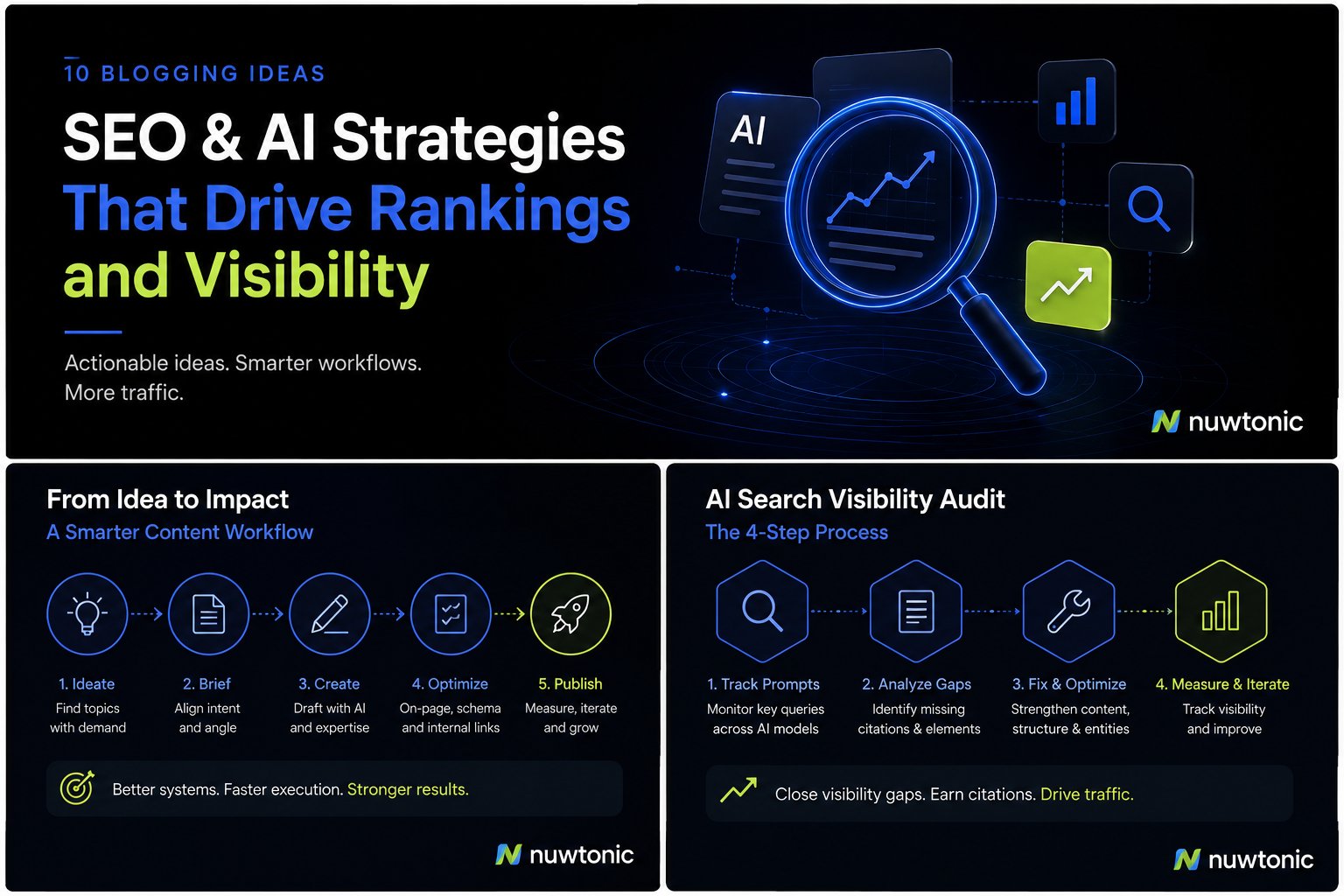
10 Ideas for Blogging: AI-Driven SEO and Content Strategies
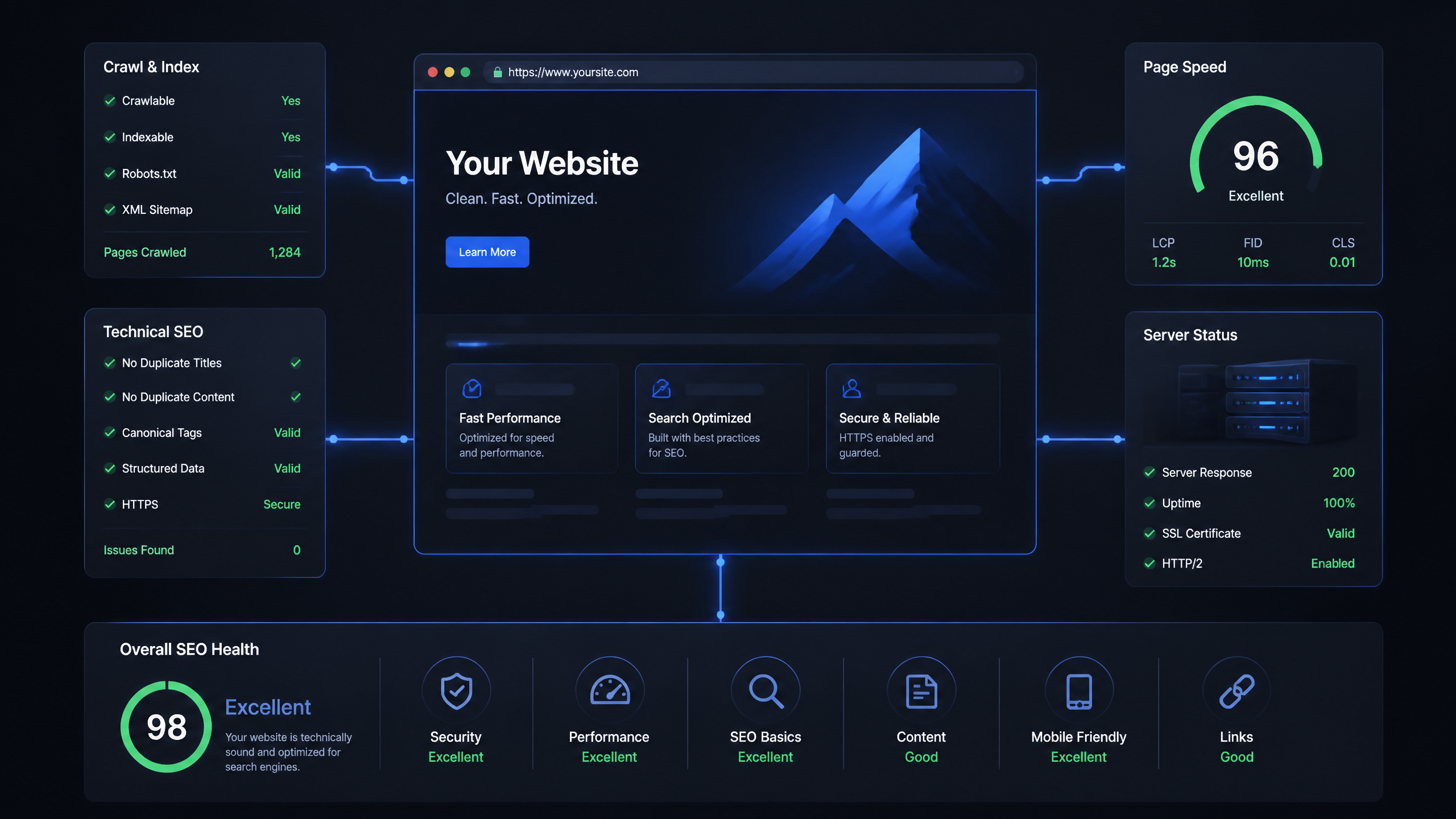
Technical SEO Ranking Factors: Hands On Guide

Technical SEO Types: Core Pillars of Site Health

Technical SEO for SaaS: A to Z Hands On Playbook
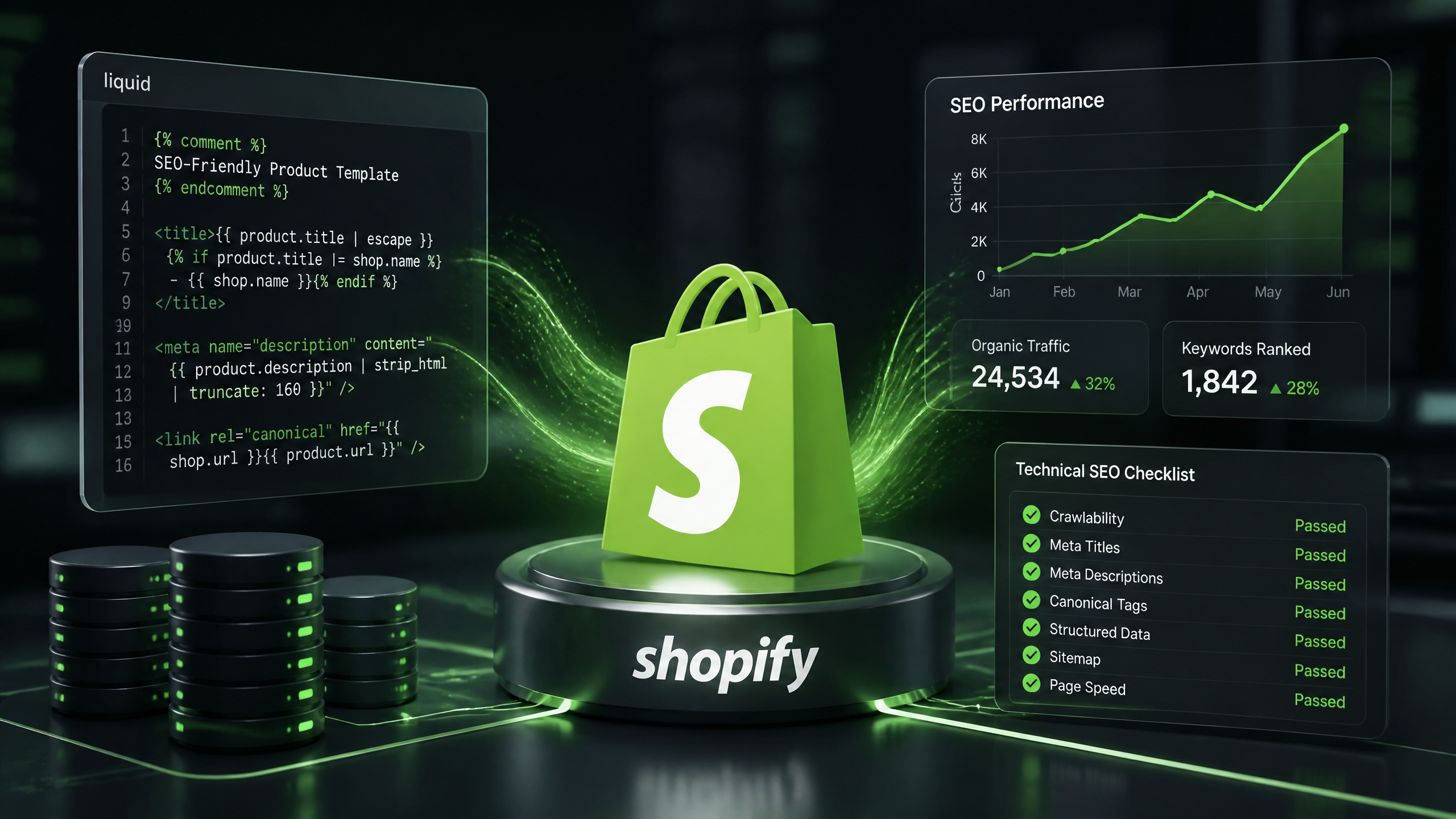
Technical SEO for Shopify: The No-Nonsense Playbook