
The landscape of search engine optimization has transformed dramatically over the past few years. What once required months of manual effort can now be accomplished in hours with AI-powered tools. But does this mean traditional SEO is dead? Not quite.
Let's break down the real differences, advantages, and how to leverage both for maximum results.
What is Traditional SEO?
Traditional SEO is the foundation of digital marketing that's been refined over two decades. It encompasses everything from keyword research to link building, performed primarily through manual analysis and human expertise.
Core Components of Traditional SEO
Keyword Research
The process starts with identifying terms your target audience searches for. Tools like Ahrefs, Semrush, and Google Keyword Planner help discover:
- Search volume
- Keyword difficulty
- Related terms and questions
- Seasonal trends
On-Page Optimization
Once keywords are identified, the manual work begins:
- Writing meta titles and descriptions
- Optimizing header tags (H1, H2, H3)
- Creating keyword-rich content
- Adding alt text to images
- Implementing schema markup
- Internal linking strategy
Technical SEO
Ensuring your site is crawlable and fast:
- Improving page speed
- Mobile optimization
- Fixing broken links
- Creating XML sitemaps
- Implementing HTTPS
- Optimizing Core Web Vitals
Link Building
Perhaps the most time-consuming aspect:
- Guest posting
- Outreach campaigns
- Broken link building
- Digital PR
- Content promotion
The Traditional Workflow
A typical traditional SEO workflow looks like this:
- Research (2-3 days): Keyword research, competitor analysis
- Planning (1-2 days): Content calendar, target pages
- Execution (1-2 weeks): Write content, optimize pages
- Implementation (2-3 days): Upload, test, verify
- Monitoring (Ongoing): Track rankings, adjust strategy
For a 100-page website, this could take 4-6 weeks of dedicated work.
Enter AI SEO: The Game Changer
AI SEO doesn't replace traditional principles—it supercharges them. Machine learning and natural language processing automate repetitive tasks while providing insights impossible to discover manually.
How AI SEO Works
Automated Analysis
AI can analyze:
- Thousands of pages in minutes
- Real-time search console data
- Competitor strategies at scale
- Content gaps and opportunities
- User intent patterns
Dynamic Optimization
Instead of one-time optimization:
- Continuous monitoring of performance
- Automatic adjustments based on data
- A/B testing at scale
- Predictive recommendations
Content Intelligence
AI understands context:
- Semantic keyword relationships
- Topic clustering
- Content quality assessment
- Readability optimization
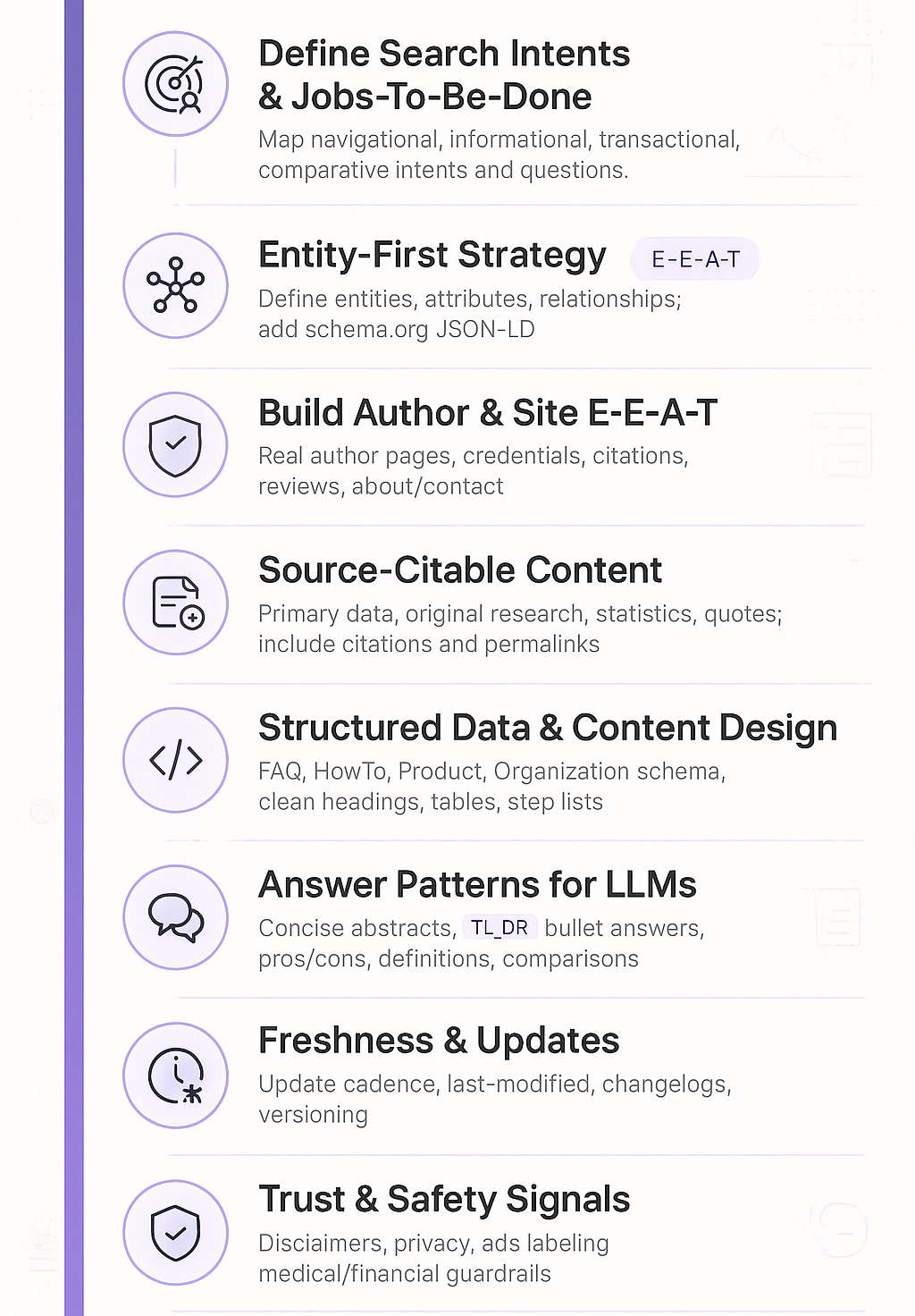
The AI SEO Workflow
The same 100-page website with AI:
- Connect Data Source (5 minutes): Link Google Search Console
- AI Analysis (10 minutes): System analyzes all pages
- Review Recommendations (30 minutes): Check AI suggestions
- Approve & Deploy (15 minutes): Execute optimizations
- Continuous Monitoring (Automated): AI tracks and adjusts
Total time: Under 2 hours vs. 4-6 weeks.
Key Differences: Traditional vs AI SEO
Speed and Scale
Traditional SEO:
- One page at a time
- Manual research for each keyword
- Hours per page for optimization
- Weekly or monthly reporting
AI SEO:
- Bulk optimization possible
- Instant keyword analysis across millions of terms
- Seconds per page with AI recommendations
- Real-time dashboards and alerts
Data Processing
Traditional SEO:
- Limited to what humans can analyze
- Samples of data for insights
- Periodic audits (monthly/quarterly)
- Reactive to changes
AI SEO:
- Processes millions of data points
- Comprehensive analysis of all available data
- Continuous, real-time monitoring
- Proactive recommendations
Accuracy and Consistency
Traditional SEO:
- Quality depends on individual expertise
- Human error possible
- Inconsistent across large teams
- Best practices may vary
AI SEO:
- Data-driven decisions
- Eliminates human error in repetitive tasks
- Consistent quality at scale
- Learns and improves over time
Cost Efficiency
Traditional SEO:
- High labor costs
- Expensive tools and subscriptions
- Agency retainers ($2,000-$10,000+/month)
- Time-intensive processes
AI SEO:
- Lower monthly costs
- Automated workflows reduce labor
- Typical subscriptions ($99-$499/month)
- ROI realized faster
Real-World Comparison
Let's look at a practical example:
Scenario: E-commerce Site with 500 Product Pages
Traditional SEO Approach:
- Task: Optimize meta descriptions for all products
- Time: 5 minutes per page = 41.7 hours
- Cost: $2,080 (at $50/hour)
- Quality: Varies by writer
- Updates: Requires repeat process
AI SEO Approach:
- Task: Same optimization
- Time: 30 minutes (bulk analysis + review)
- Cost: Monthly subscription ($149)
- Quality: Consistent, data-driven
- Updates: Automatic as products change
Result: 98% time savings, 93% cost savings, better consistency.
What AI SEO Can Do That Traditional Can't
1. Predictive Analysis
AI can predict:
- Which pages will decline in rankings
- Upcoming algorithm changes impact
- Content that will perform well
- Optimal posting times
2. Intent Matching at Scale
Understanding user intent for thousands of keywords simultaneously:
- Informational vs. transactional
- Geographic intent
- Device-specific intent
- Seasonal patterns
3. Automatic Schema Generation
AI can:
- Analyze page content
- Determine appropriate schema types
- Generate valid JSON-LD markup
- Update dynamically as content changes
4. Competitive Intelligence
Monitor competitors automatically:
- New content published
- Ranking changes
- Backlink acquisition
- Technical improvements
5. Voice and Visual Search Optimization
Optimize for emerging search types:
- Natural language queries
- Image recognition
- Voice assistant queries
- Multimodal search
What Traditional SEO Still Does Better
Despite AI's power, human expertise remains crucial in several areas:
Strategic Thinking
AI suggests; humans decide:
- Overall content strategy
- Brand positioning
- Audience targeting
- Business goal alignment
Creative Content
AI can assist, but humans excel at:
- Unique perspectives and opinions
- Storytelling and emotion
- Brand voice consistency
- Cultural sensitivity
Relationship Building
Link building still requires human touch:
- Outreach to website owners
- Partnership negotiations
- Influencer collaborations
- PR and media relations
Ethical Considerations
Humans ensure:
- Compliance with guidelines
- Avoiding black-hat tactics
- Respecting user privacy
- Maintaining brand reputation
The Optimal Approach: Hybrid SEO
The future isn't "either/or"—it's "both/and." Here's how to combine them:
Let AI Handle:
✅ Technical audits and fixes
✅ Bulk meta tag optimization
✅ Schema markup generation
✅ Keyword research and analysis
✅ Performance monitoring
✅ Data processing and reporting
Let Humans Handle:
✅ Content strategy and planning
✅ Brand messaging and voice
✅ Editorial oversight
✅ Relationship building
✅ Creative campaign ideas
✅ Strategic decision making
Workflow Example
Month 1:
- Human: Define business goals and target audience
- AI: Analyze current site performance and opportunities
- Human: Review and prioritize AI recommendations
- AI: Execute technical optimizations
- Human: Create content strategy based on AI insights
- AI: Optimize and deploy content
- Human: Monitor results and adjust strategy
Ongoing:
- AI continuously monitors and optimizes
- Human reviews weekly reports
- Strategic adjustments made monthly
- Creative content developed by humans
- AI ensures technical excellence
Common Misconceptions
"AI SEO Will Replace SEO Professionals"
Reality: AI augments, not replaces. SEO professionals using AI are 10x more productive than those who don't. The role evolves from executor to strategist.
"Traditional SEO is Obsolete"
Reality: The fundamentals remain. AI just executes them better and faster. Understanding traditional SEO is crucial for guiding AI tools effectively.
"AI SEO is Too Expensive"
Reality: AI SEO typically costs 70-90% less than traditional agency work. The ROI is realized much faster due to automation.
"AI Content is Low Quality"
Reality: Modern AI tools create high-quality, contextually relevant content. The key is proper oversight and refinement by humans.
Getting Started with AI SEO
Step 1: Choose Your Tools
For comprehensive AI SEO:
- AltSchema: Schema, meta tags, alt text automation
- Analytics: Google Search Console integration
- Content: AI-assisted writing tools
- Monitoring: Real-time performance tracking
Step 2: Audit Your Current SEO
Use AI to:
- Identify technical issues
- Find content gaps
- Analyze competitor strategies
- Prioritize optimization opportunities
Step 3: Implement Quick Wins
Start with high-impact, low-effort tasks:
- Fix missing meta descriptions
- Add schema markup
- Optimize images (alt text, compression)
- Improve page speed
Step 4: Develop a Hybrid Strategy
Combine:
- AI for execution and monitoring
- Human expertise for strategy and creativity
- Regular reviews and adjustments
- Continuous learning and optimization
Step 5: Measure and Iterate
Track key metrics:
- Organic traffic growth
- Ranking improvements
- Conversion rate changes
- Time saved on manual tasks
- ROI from AI tools
The Bottom Line
Traditional SEO taught us what works. AI SEO helps us do it faster, better, and at scale.
You don't need to choose between them. The most successful SEO strategies in 2025 combine:
- Human creativity and strategic thinking
- AI efficiency and data processing
- Traditional best practices
- Cutting-edge automation
The question isn't "Traditional or AI?" It's "How fast can I adopt AI to stay competitive?"
Take Action Today
Ready to experience the power of AI SEO?
Try AltSchema and see how AI can:
- Analyze your entire website in minutes
- Generate optimized schema markup automatically
- Create perfect meta descriptions at scale
- Optimize alt text using computer vision
- Monitor performance 24/7
Start your free trial and join thousands of SEO professionals who've already made the shift to AI-powered optimization.
The future of SEO is here. Are you ready?
Want to learn more about AI SEO? Subscribe to our newsletter for weekly tips, case studies, and industry insights.